
Why It Matters: The Benefits of Sensory Inclusion in Kitchen Design
Author: Belinda Dangerfield
If you had asked me a few years ago whether kitchen design could impact mental health, family connection, or daily comfort, I probably would have shrugged. But life has a way of teaching lessons we didn’t even know we needed. As a mother of a child with sensory sensitivities, I’ve come to deeply understand—and embrace—the principles of sensory-inclusive design.
Designing a kitchen with the senses in mind isn’t just about accessibility or trends. It’s about creating a space where life flows more smoothly, where stress melts away, and where connection feels natural. Whether it’s cooking alone, hosting family, or helping my child navigate a world that can sometimes feel overwhelming, a kitchen that considers sight, sound, touch, and smell makes every moment easier—and more joyful.
Here’s what I’ve discovered about why sensory-inclusive kitchens truly matter.
1. Enhanced Well-Being
The kitchen can be one of the most stressful parts of the home—especially if it feels noisy, cluttered, or chaotic. But when it’s designed with the senses in mind, it becomes a place of calm and comfort.
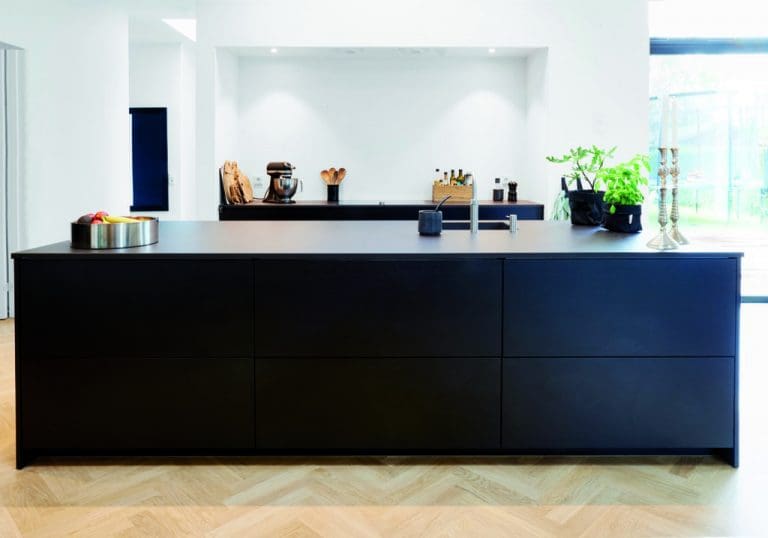
- Visual calm: Muted colours, natural light, and soft materials make the kitchen feel peaceful rather than overstimulating. Even small changes—a matte backsplash instead of a shiny one, soft-coloured cabinetry instead of stark white—can make a huge difference.
- Sound management: Gentle background noise or thoughtful acoustics reduce stress. Loud appliances or echoes that I used to ignore can now feel overwhelming to sensitive ears. My own child complains about the buzz of lights, the hum of the fridge, and the dishwasher—sounds I barely notice but that she feels acutely.
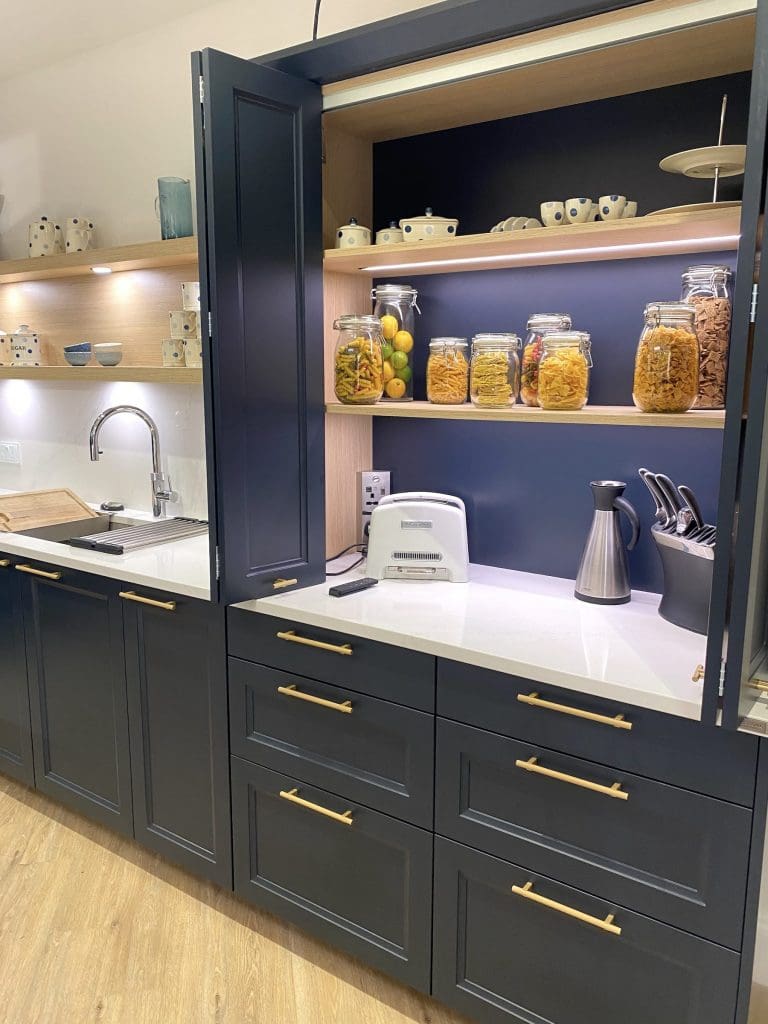
- Tactile comfort: Warm wood, smooth stone, or soft furnishings offer a grounding sense of touch. Something as simple as a wooden countertop can make a space feel safe and inviting compared to the cold, hard surfaces of granite or quartz.
- Inviting aromas: Herbs, citrus, or essential oils create subtle sensory cues that calm the mind and evoke positive associations with routines like cooking or mealtimes.
Over time, I’ve noticed that our sensory-aware kitchen doesn’t just make daily tasks easier—it uplifts mood, supports mental health, and creates moments of stillness in our busy lives.

2. Greater Accessibility
Sensory-inclusive design isn’t just about aesthetics—it’s about empowerment. By thinking about different abilities, sensory needs, and neurodiversity, you create a kitchen that works for everyone.
- Low-vision supports: Tactile markers and contrasting colours help navigate the space confidently.
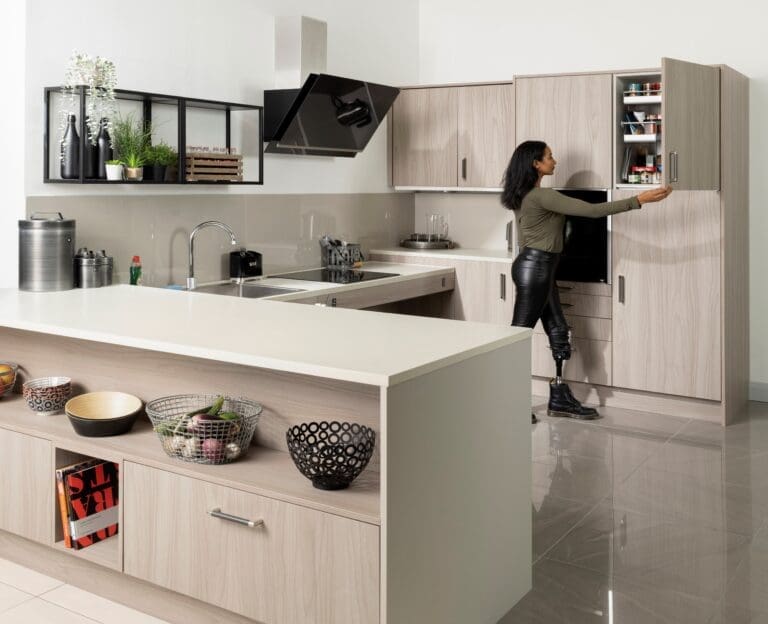
- Adaptive tools: Voice-activated appliances, height-adjustable counters, and appliances with simplified controls make cooking accessible for children, adults, and anyone with limited mobility. Even small changes—like an oven that reacts to spoken commands or a tap that delivers precise measured amounts—can mean independence and confidence for my child.
- Predictable layouts: Gentle cues and consistent placement reduce anxiety for neurodivergent individuals.
As a mom, these details aren’t just conveniences—they’re lifelines. I’ve seen my child independently prepare her own meals, maintain a routine of loading and unloading the dishwasher, or help me cook because the environment is thoughtfully designed. Accessibility here is less about meeting standards and more about creating freedom, dignity, and confidence in everyday life.
3. Shared Enjoyment
One of the most beautiful aspects of sensory-inclusive kitchens is how they invite connection. Kitchens are naturally social spaces, but thoughtful design makes those connections deeper and more inclusive.
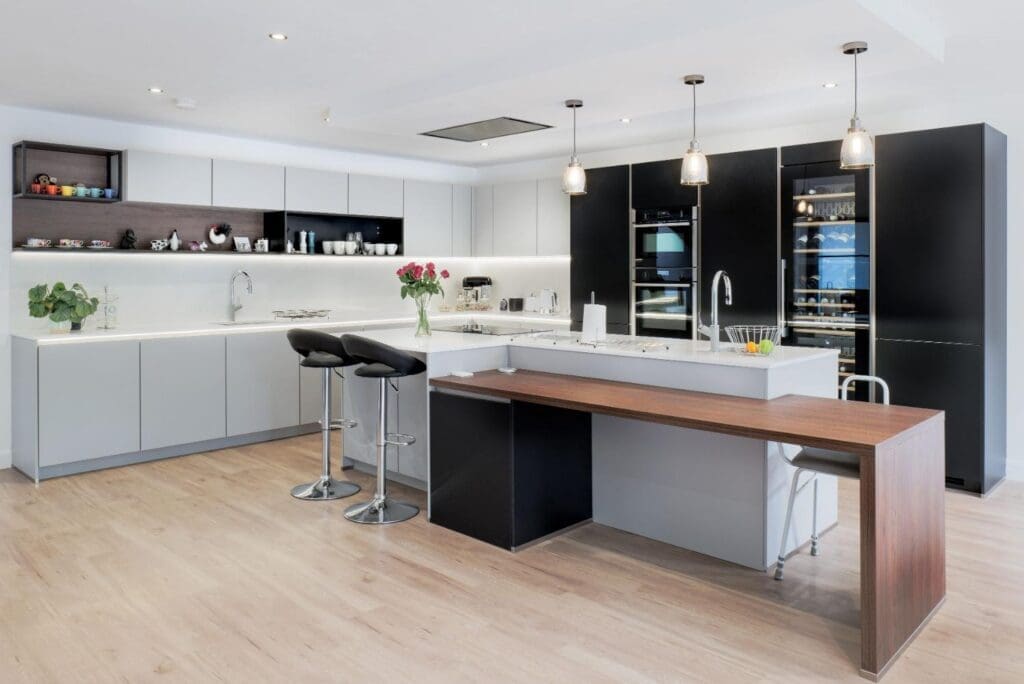
- Interactive prep areas: These encourage collaboration and learning—baking cookies, chopping vegetables, or helping with dinner. Considering worktop heights, or having a perch or seating nearby, means children and adults can chat, observe, or help comfortably.
- Multi-sensory engagement: Handling herbs, listening to soft music, or feeling different textures makes shared experiences richer. Integrated herb boxes, tactile storage, and even a Bluetooth speaker subtly enhance these moments.
- Accessible seating and adaptive tools: Everyone can participate, regardless of age or ability. Smart appliances, like taps dispensing accurate measurements, or pull-out shelving that’s easy to reach, make contribution possible for all.
I’ll never forget a moment when my child, who usually avoids the kitchen during mealtime chaos, joyfully helped prepare a meal because the space felt safe and manageable. Those small experiences—shared smells, sounds, and textures—build memory and connection in a way nothing else can.
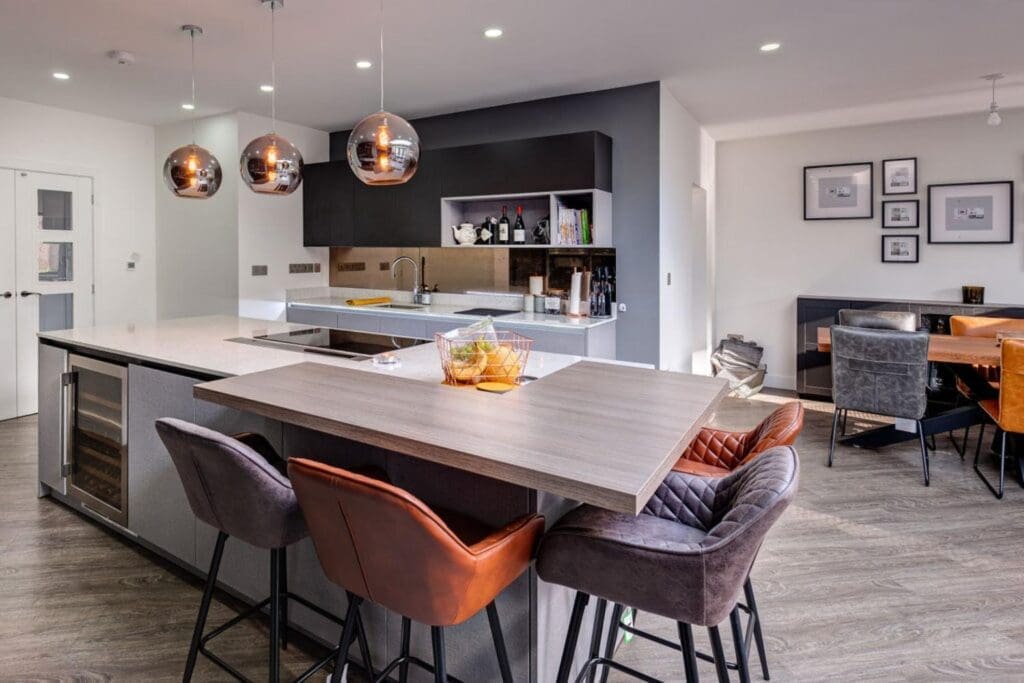
3. Shared Enjoyment
One of the most beautiful aspects of sensory-inclusive kitchens is how they invite connection. Kitchens are naturally social spaces, but thoughtful design makes those connections deeper and more inclusive.
- Interactive prep areas: These encourage collaboration and learning—baking cookies, chopping vegetables, or helping with dinner. Considering worktop heights, or having a perch or seating nearby, means children and adults can chat, observe, or help comfortably.
- Multi-sensory engagement: Handling herbs, listening to soft music, or feeling different textures makes shared experiences richer. Integrated herb boxes, tactile storage, and even a Bluetooth speaker subtly enhance these moments.
- Accessible seating and adaptive tools: Everyone can participate, regardless of age or ability. Smart appliances, like taps dispensing accurate measurements, or pull-out shelving that’s easy to reach, make contribution possible for all.
I’ll never forget a moment when my child, who usually avoids the kitchen during mealtime chaos, joyfully helped prepare a meal because the space felt safe and manageable. Those small experiences—shared smells, sounds, and textures—build memory and connection in a way nothing else can.
3. Shared Enjoyment
One of the most beautiful aspects of sensory-inclusive kitchens is how they invite connection. Kitchens are naturally social spaces, but thoughtful design makes those connections deeper and more inclusive.
- Interactive prep areas: These encourage collaboration and learning—baking cookies, chopping vegetables, or helping with dinner. Considering worktop heights, or having a perch or seating nearby, means children and adults can chat, observe, or help comfortably.
- Multi-sensory engagement: Handling herbs, listening to soft music, or feeling different textures makes shared experiences richer. Integrated herb boxes, tactile storage, and even a Bluetooth speaker subtly enhance these moments.
- Accessible seating and adaptive tools: Everyone can participate, regardless of age or ability. Smart appliances, like taps dispensing accurate measurements, or pull-out shelving that’s easy to reach, make contribution possible for all.
I’ll never forget a moment when my child, who usually avoids the kitchen during mealtime chaos, joyfully helped prepare a meal because the space felt safe and manageable. Those small experiences—shared smells, sounds, and textures—build memory and connection in a way nothing else can.
Final Thought
Sensory-inclusive design goes beyond accessibility or aesthetics. It’s about creating spaces that support physical needs, nurture emotional well-being, and encourage connection. Kitchens designed with the senses in mind make cooking, eating, and gathering more joyful—and more inclusive—for everyone.
When I see my child confidently navigating the space, helping prepare a meal, or simply enjoying the calm of our kitchen, I understand the real power of this design: it transforms a functional room into a sanctuary, a classroom, and the heart of our home.